


Basement flood barriers for villas seal the openings where surface water enters during heavy rain. They are now a practical first line of defense for ground-floor and below-grade spaces across Dubai, Abu Dhabi, and Muscat. Most villa basements, semi-basements, and garage ramps sit at or below the surrounding grade, which means they are directly in the path of surface water when drainage systems are overwhelmed by short, intense rainfall. This article covers where water actually enters, the barrier types available, why this risk is specific to each of the three cities, how to choose the right system, and what to do when a heavy rain alert is issued.
Why Villa Basements and Ground Floors Are Exposed
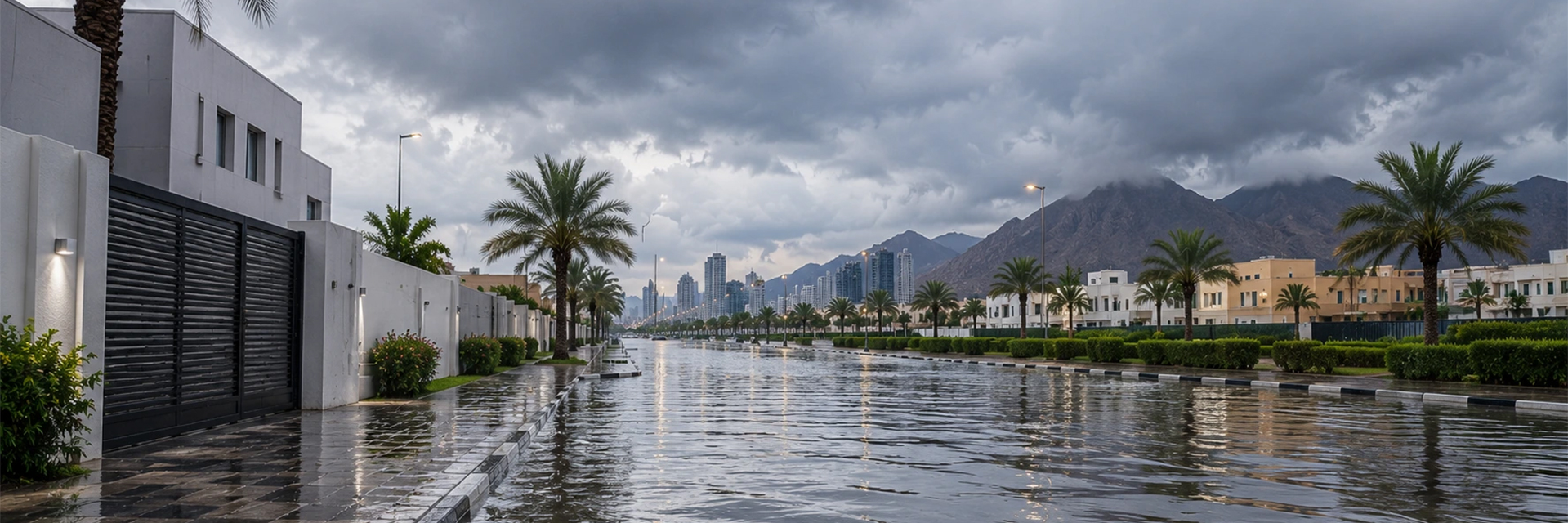
Villas across the UAE and Oman are designed to sit at or near ground level, with basements, semi-basements, and garage ramps that drop below the surrounding grade. Hard-surfaced driveways, paved courtyards, and boundary walls direct water toward the building rather than away from it. When rainfall is light, drainage handles this without difficulty. When rainfall is short, sudden, and intense, a pattern that occurs across the region, drainage systems can be overwhelmed within minutes, and water that has nowhere to go finds the lowest accessible point.
The National Centre of Meteorology in the UAE issues weather alerts when significant rainfall is forecast, but an alert and physical protection at the opening are two separate things. An alert tells you water is coming. A barrier determines whether it enters the building. For villas with below-grade spaces, relying on drainage alone is not sufficient protection when rainfall intensity exceeds the designed drainage capacity of the surrounding infrastructure.
Where Water Actually Enters a Villa Basement
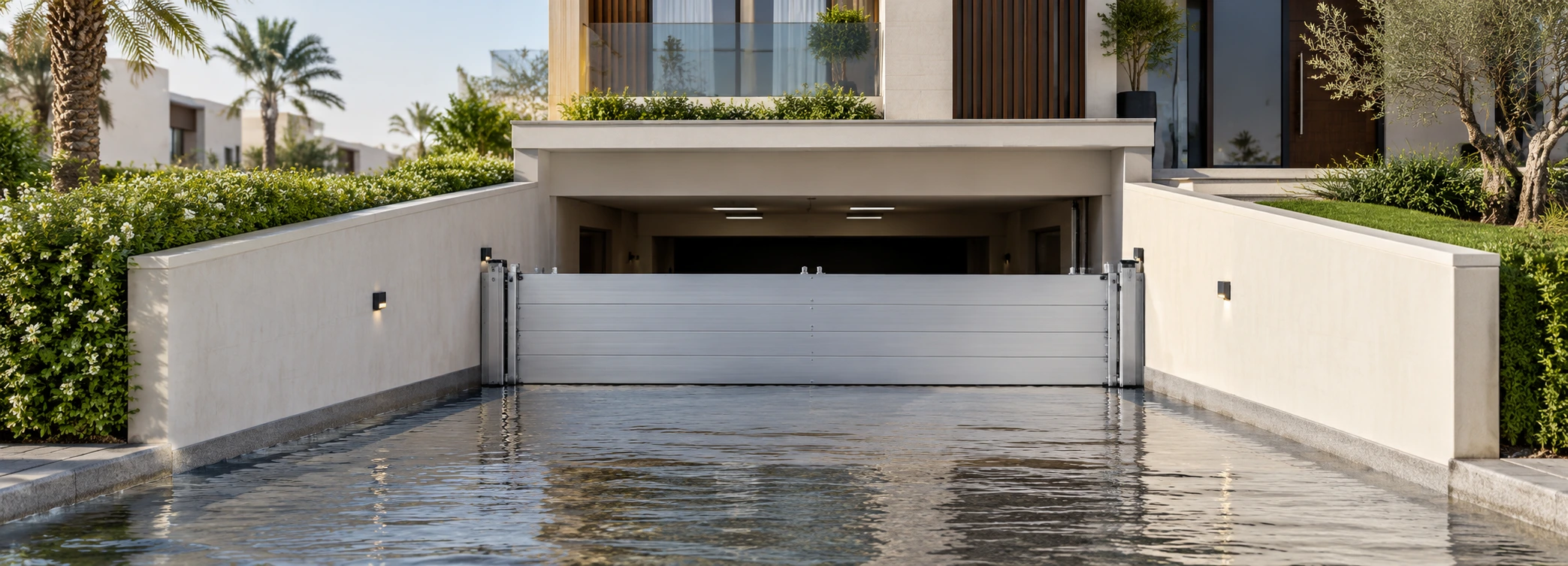
Basement flood barriers for villas work by sealing specific openings where surface water enters the building. Understanding where those openings are is the starting point for any protection strategy.
The most common entry points in a typical UAE or Oman villa are the basement or garage ramp, which sits below grade and is directly exposed to surface runoff; external stairwells leading to a lower ground or basement level; light wells and window wells where ground-level water collects; service doors, side entries, and maid's room doors at or near ground level; low-level mechanical ducts, vents, and louvres that cannot be sealed during an event; and drain and sewer backflow when external drainage systems are overwhelmed.
One important limit to be clear about: flood barriers seal surface water at openings. They do not stop groundwater pressure through basement walls or floors, and they do not prevent sewer backflow through internal drain points. Those problems require different solutions, specifically waterproofing membranes, check valves, and sump systems. A barrier strategy addresses surface entry points and nothing more.
Types of Flood Barriers for Villas
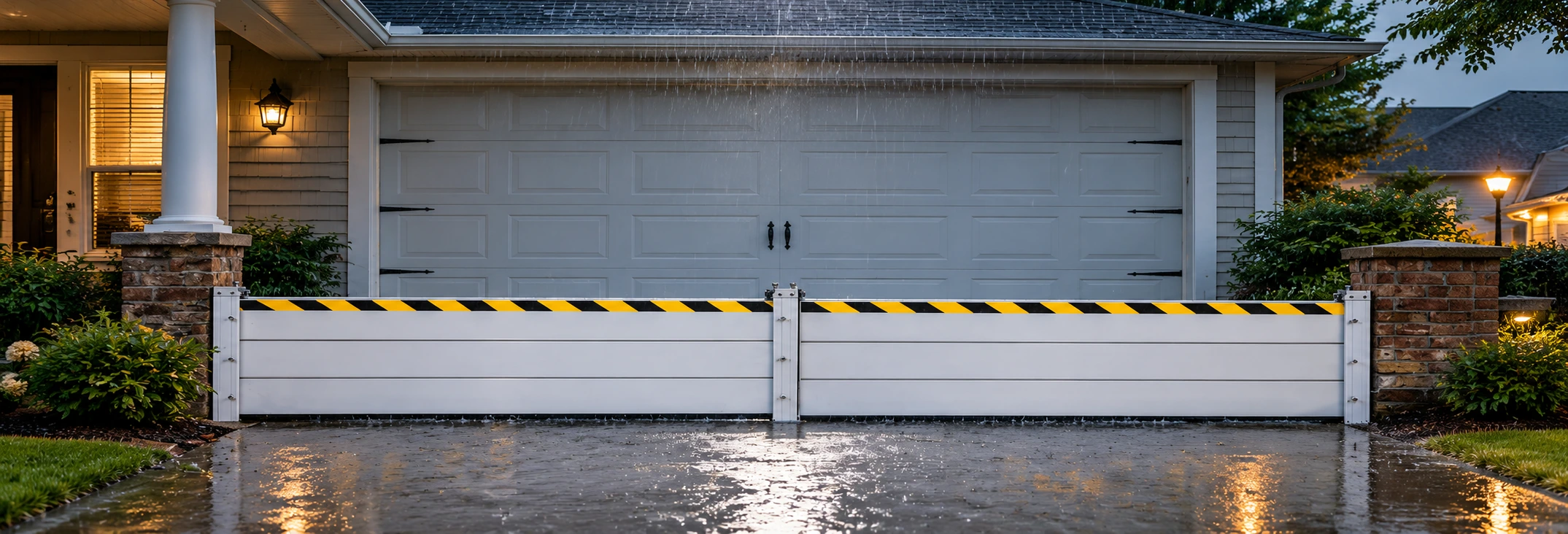
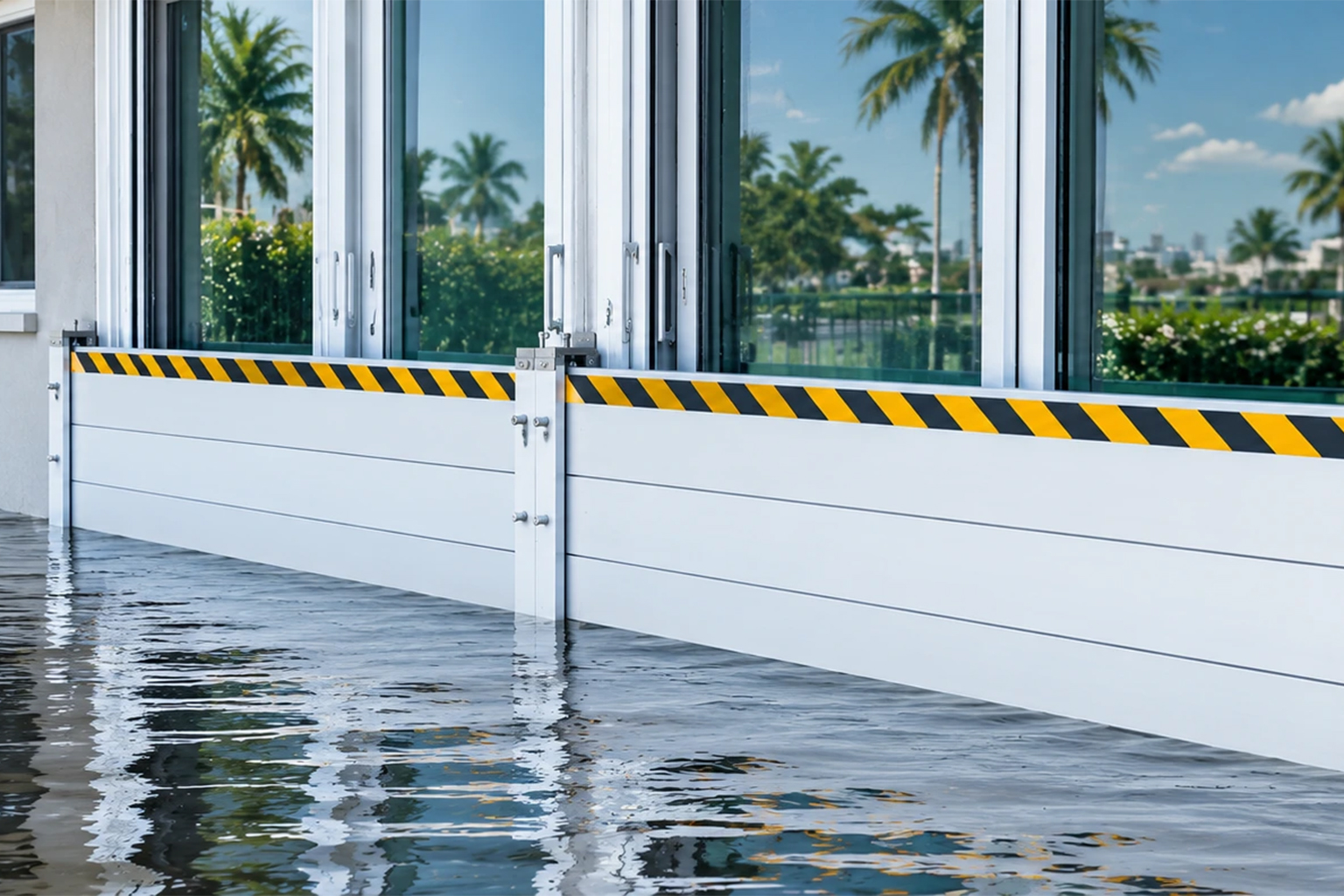
Flood barriers for villa basements and ground floors are available in four main configurations, each suited to a different combination of opening type, occupancy pattern, and required protection level.
| Type | How it works | Best villa use | Key considerations |
|---|---|---|---|
| Manual / demountable | Panels fitted into fixed anchors when needed | Basement doors, ramps, garage openings | Requires someone available to deploy at short notice |
| Automatic | Deploys when water is detected by sensors | Unoccupied villas or unattended openings | Higher initial cost; requires regular servicing and sensor checks |
| Portable / temporary | Placed across an opening without fixed anchors | Wide or irregular openings | Seal quality depends on the surface condition of the floor and frame |
| Custom-engineered | Fabricated to the exact dimensions of the opening | Non-standard ramps and entries | Longer lead time; most accurate fit and seal performance |
Engineered barriers outperform sandbags in every practical category relevant to villas. Sandbags require labour to source, fill, position, and dispose of, and the window between a rain alert and water arriving is often too short for this to work reliably. Sandbags also seal poorly on hard, smooth surfaces, leak at corners, and generate contaminated waste that requires disposal after the event. A properly specified demountable or automatic barrier installs quickly, seals against a pre-installed frame, and is reusable across many events.
For the full range of manual and automatic flood barriers available for residential properties, see Dosteen's flood protection solutions.
Why This Matters in Dubai, Abu Dhabi and Muscat
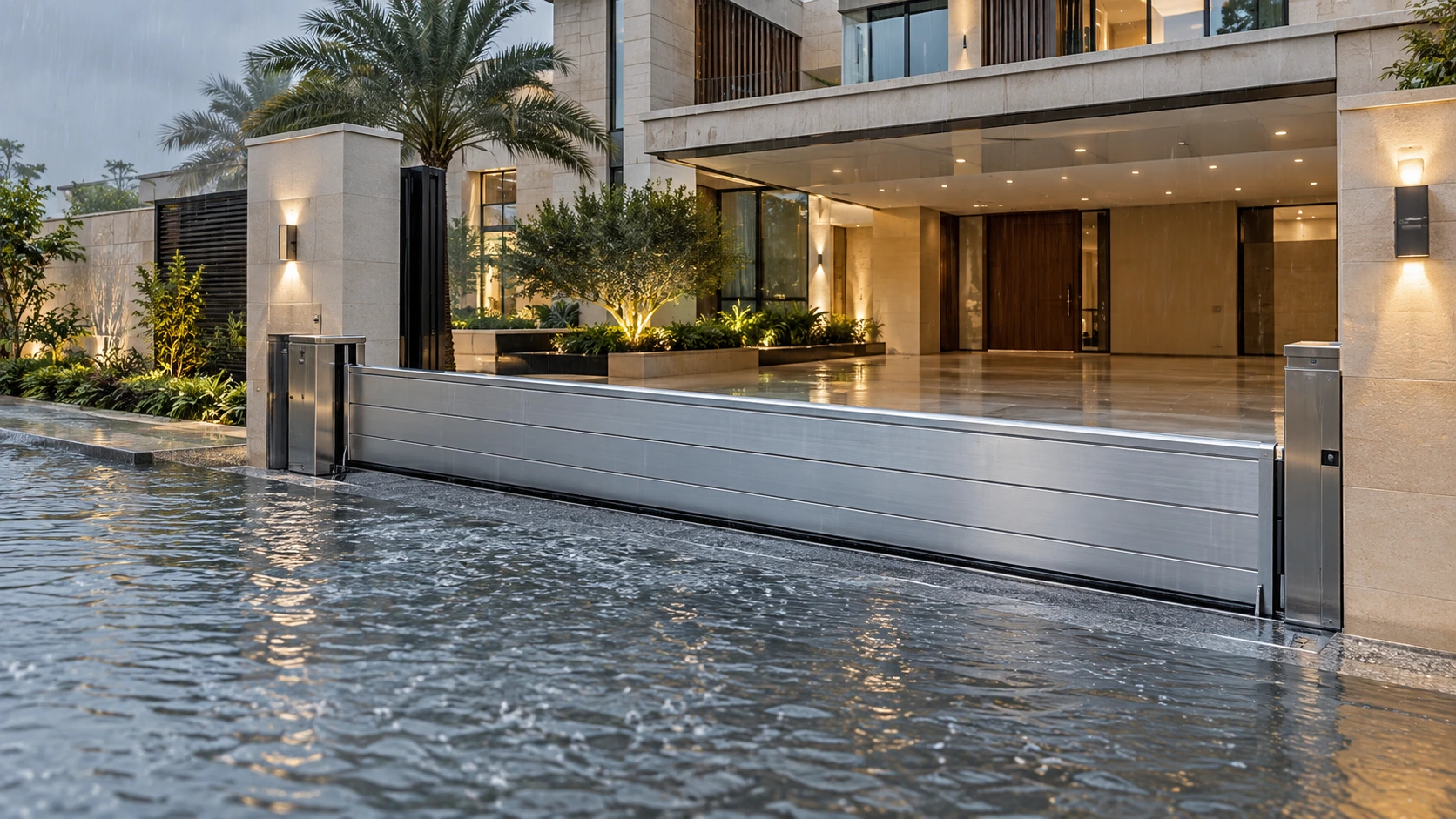
The flood exposure profile of each city is different, which affects both the type of event that creates risk and the openings that are most vulnerable.
Dubai combines dense villa communities, extensive hard-surfaced roads and driveways, and drainage infrastructure that is effective under normal conditions but can be overwhelmed by short, high-intensity rainfall events. In villa compounds and private estates, hard landscaping directs water toward building entries rather than to absorption points, making ground-floor and ramp entries particularly vulnerable when surface water has nowhere to drain.
Abu Dhabi has extensive low-lying and coastal areas where terrain provides limited natural escape routes for surface water. Coastal proximity also means salt-laden humidity affects the materials and fixings of any installed system over time, which needs to be factored into barrier specification.
Muscat faces a different risk profile, where wadi-related runoff and rapid surface flow after heavy rain can move quickly through residential areas. The speed of wadi-driven surface flow means warning time before water reaches a villa opening can be very short, which increases the case for automatic systems on any openings that would be difficult to protect manually at pace.
Dosteen supplies and installs flood barriers for villas across the UAE and Oman, covering all three cities and the broader residential markets in each region.
How to Choose Basement Flood Barriers for UAE Villas
Choosing the right barrier starts with the specific openings on your property and works outward to occupancy, material requirements, and appearance. No single barrier type is right for every villa.
A practical checklist for specifying villa flood barriers:
- Measure every opening including width, height, and the condition of the floor and frame surfaces where the barrier will seal
- Decide the realistic protection height based on how water accumulates on your plot during heavy rain. The barrier needs to be taller than the water level it will be asked to hold back
- Choose manual or automatic based on occupancy. If the villa is frequently unoccupied during storms, automatic systems remove the dependence on someone being present to deploy
- Request sealing performance evidence from any supplier, including independent test data if available, rather than relying on general performance claims
- Select materials suited to your site. Coastal proximity, heat, and UV exposure all affect seal compounds, surface coatings, and fixings over time
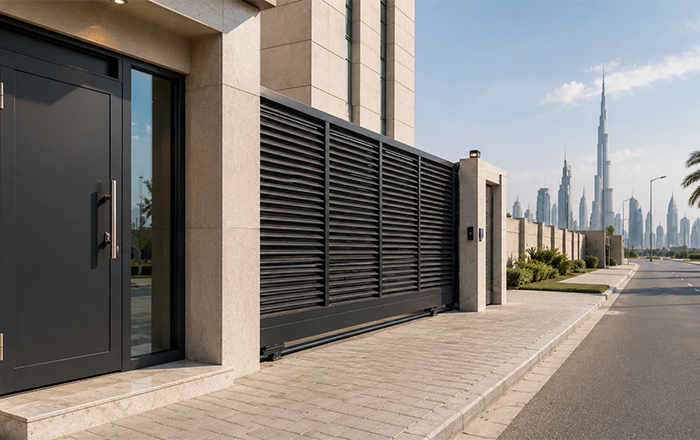
- Consider appearance, storage, and any developer or community requirements. Some gated communities have guidelines on visible changes to entrance areas that may affect barrier choice
Barriers work best as part of a layered approach that also includes clear drainage maintenance, appropriate landscaping, and where relevant, waterproofing of basement walls and floors. A site assessment from an experienced supplier is the most practical way to confirm the right system for your specific property.
What to Do When a Heavy Rain Alert is Issued
When the National Centre of Meteorology in the UAE or the equivalent authority in Oman issues a heavy rain alert, the following steps apply to villa owners with basement or ground-floor spaces:
- Fit or test any demountable barriers across all identified entry points before water arrives
- Check that automatic barriers are functioning and that sensors are clean and unobstructed
- Clear drain covers and channels near the building perimeter of leaves, sand, and debris
- Move valuables, documents, and equipment above floor level in any below-grade space
- Isolate electrical circuits serving basement areas only if it is safe to do so without entering a flooded or flooding space
- Do not attempt to deploy barriers into moving water.
Frequently Asked Questions
1. Do villa basements really need flood barriers in the UAE and Oman?
In many cases, yes. Villa basements, semi-basements, and garage ramps sit below the surrounding grade and are directly in the path of surface water when drainage systems are overwhelmed by intense rainfall. Without a physical barrier at the opening, water enters the space regardless of how quickly it is raining.
2. Can a flood barrier stop water coming through basement walls or drains?
No. Flood barriers seal surface water at specific openings including doors, ramps, vents, and stairwells. They do not address groundwater pressure through walls or floors, and they do not prevent sewer backflow through internal drain points. Those problems require waterproofing membranes, check valves, or sump systems.
3. What is the difference between manual and automatic flood barriers for homes?
Manual barriers require someone to be present and to fit the panels into their fixed anchor points when rain is forecast. Automatic barriers deploy on their own when sensors detect water, making them the appropriate choice for any opening that may be unattended during a storm event.
4. How do I choose flood barriers for a villa in Dubai, Abu Dhabi or Muscat?
Start by measuring every vulnerable opening and confirming the realistic protection height required. Then decide on manual or automatic based on whether someone will be present during storms, confirm material suitability for your site's coastal and climate conditions, and request a site assessment from an experienced supplier to confirm the final specification.
5. Are flood barriers better than sandbags for villa protection?
For most villas, yes. Engineered barriers deploy faster, seal more accurately against a pre-installed frame, and are reusable across many events without additional labour or disposal costs. Sandbags require sourcing, filling, and positioning in the window between an alert and water arriving, which is often too short for the process to work reliably on multiple openings.
Protecting Your Villa Starts with the Right Openings Assessment
If your villa has a basement, semi-basement, garage ramp, or ground-floor entries that are at or below the surrounding grade, a site assessment is the practical starting point. Dosteen's engineering team carries out opening assessments across Dubai, Abu Dhabi, Muscat, and the wider UAE and Oman, identifying every vulnerable point and recommending the right barrier type for each one.
Explore flood barrier solutions for villas or request a site assessment to discuss your property.