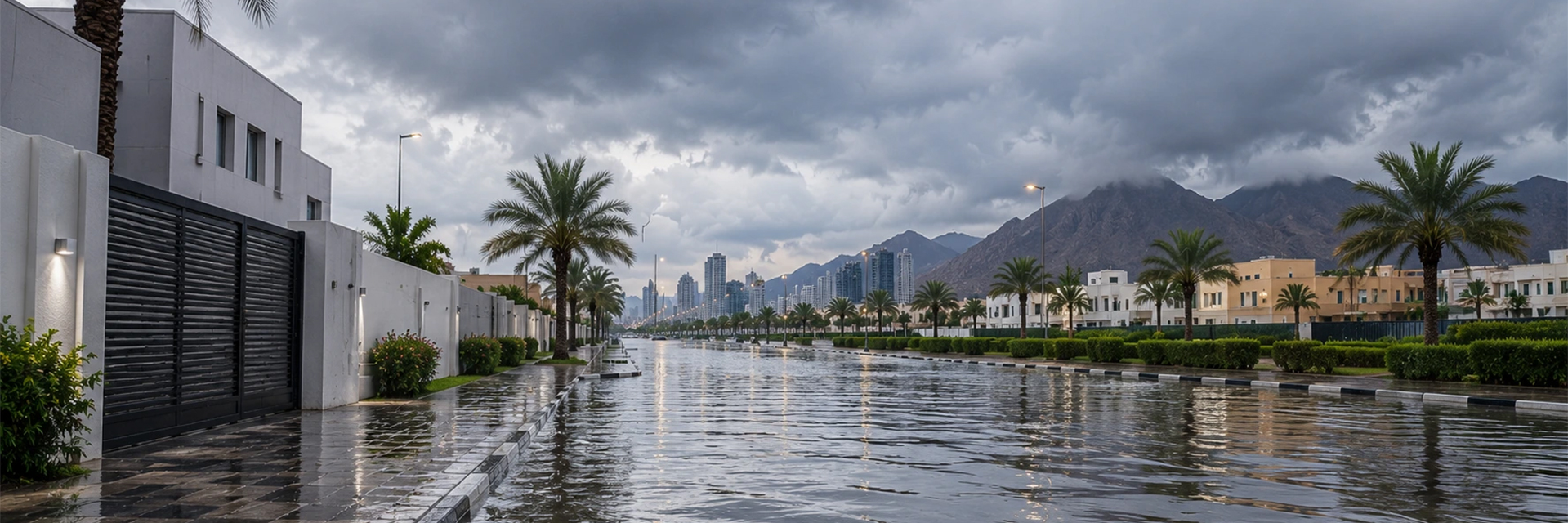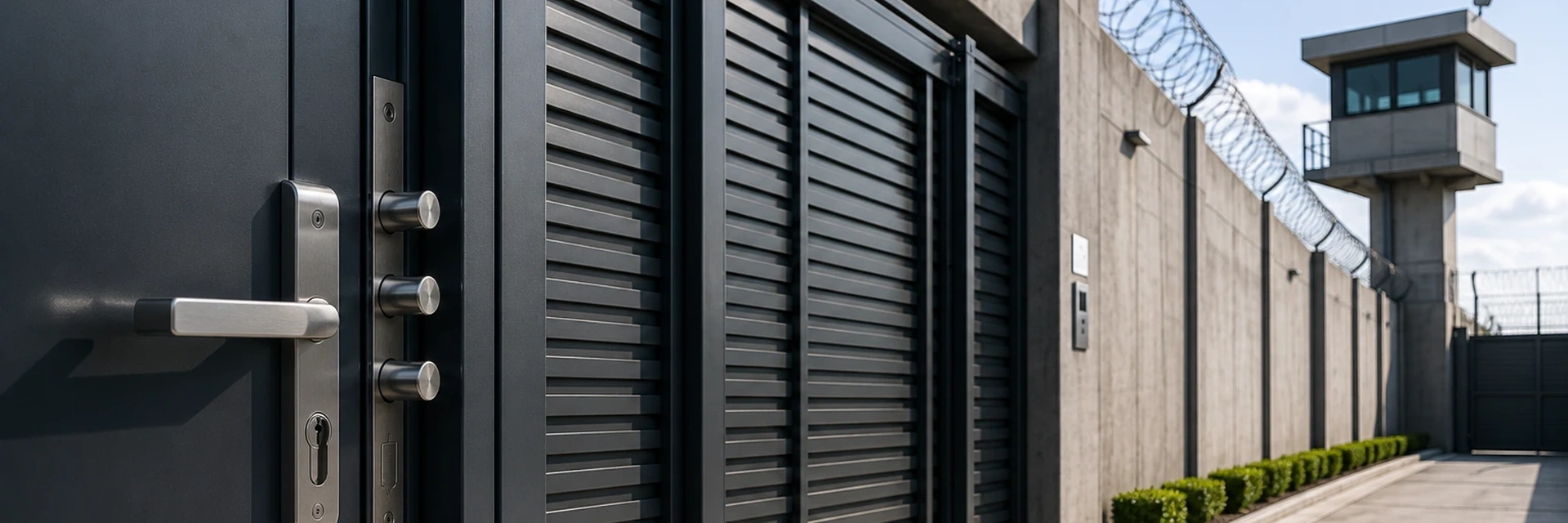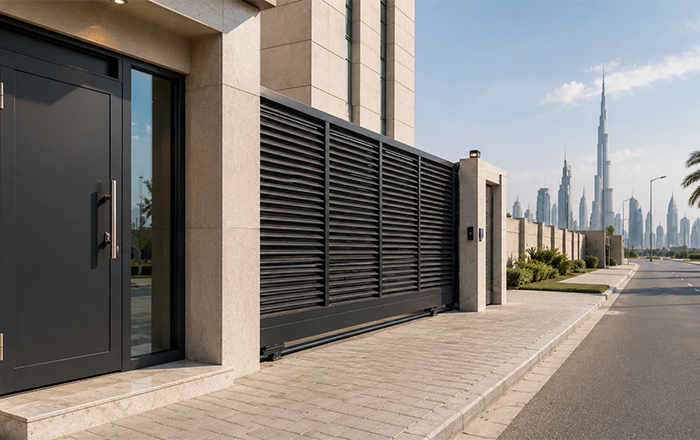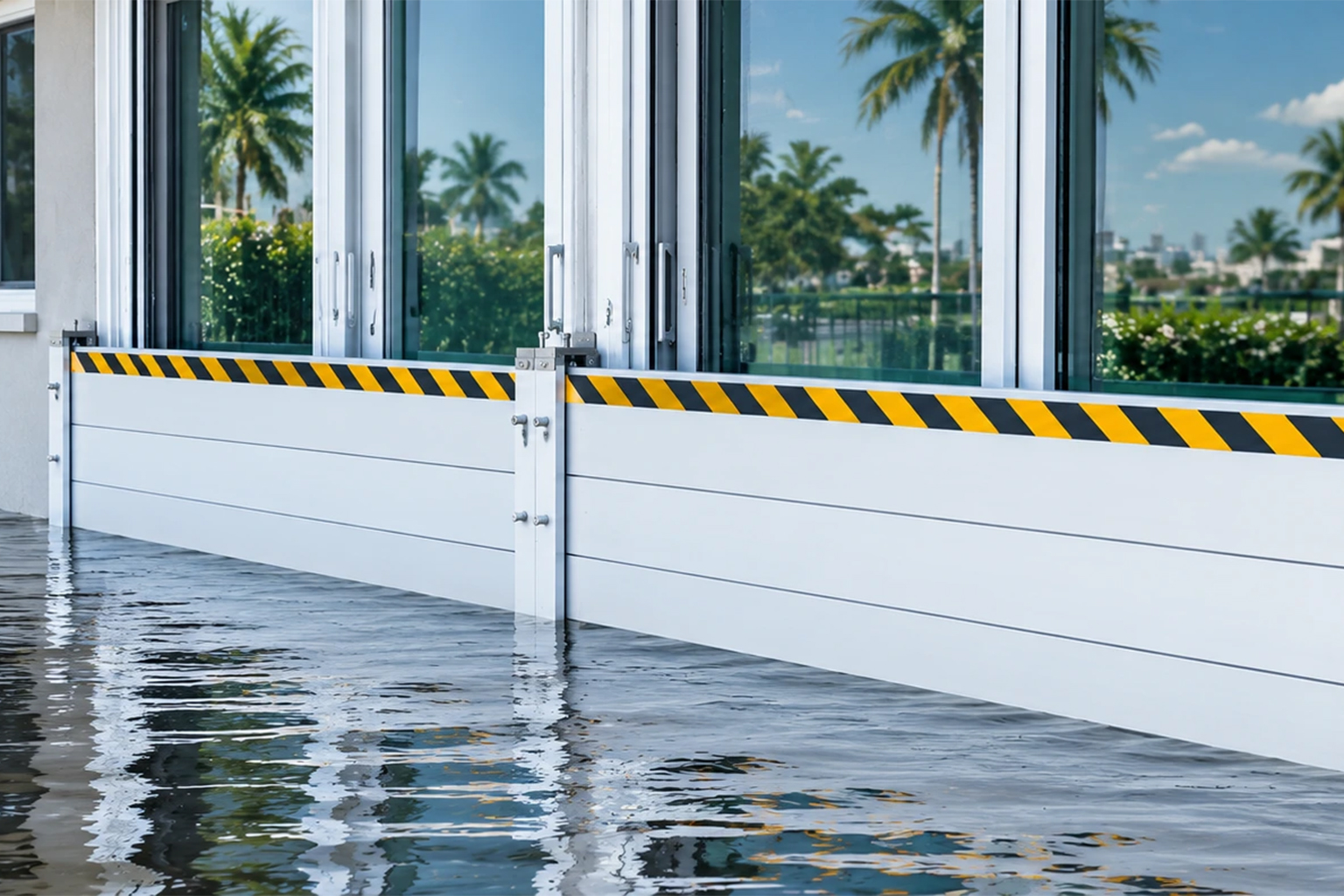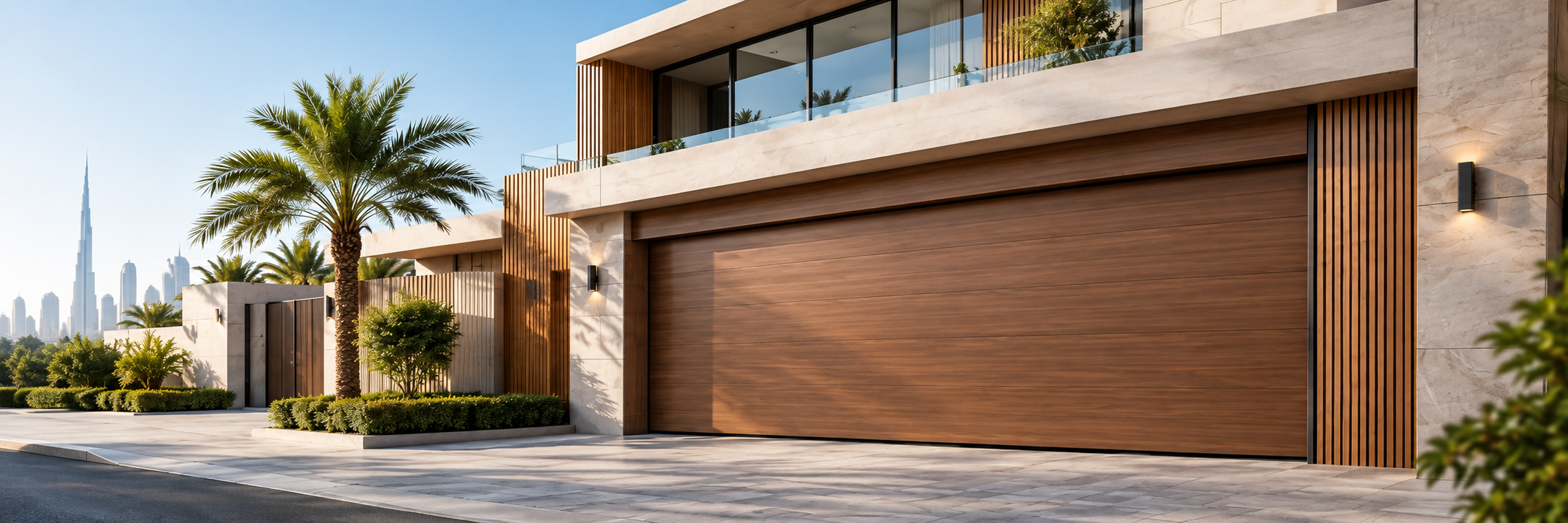



Modern doors, shutters, and gates are often tested against recognised performance standards, yet many products that perform well elsewhere begin to bind, warp, or require frequent maintenance after only a few years in the Gulf. The issue is not necessarily poor manufacturing but a mismatch between the product's original design assumptions and the region's environmental conditions. Engineering for the GCC means accounting for extreme heat, windblown sand, intense UV exposure, and, in many locations, coastal humidity from the outset. This guide explains the engineering principles behind climate-ready products and the design decisions that improve long-term performance in Gulf conditions.
Why Heat-Resistant Door Engineering Matters in the Gulf
Effective heat resistant door engineering goes beyond selecting durable materials. In the GCC, products must continue operating reliably despite multiple environmental stresses that affect how they function, not just how they look.
These conditions include:
- Extreme heat that causes materials to expand and contract.
- Intense UV exposure that accelerates the ageing of finishes and seals.
- Sand and dust that interfere with moving components and operating mechanisms.
- Coastal humidity that increases the risk of corrosion in exposed hardware.
These factors influence door clearances, structural movement, sealing performance, and the reliability of automated systems. Understanding these engineering challenges helps architects and consultants specify products that are designed for regional conditions rather than adapting solutions intended for milder climates. This principle also extends to exterior systems such as architectural shades, where environmental performance is equally important.
Thermal Expansion: Why Metal Behaves Differently in Extreme Heat
One of the most important considerations in extreme heat door engineering is understanding how materials respond to sustained high temperatures. This is particularly relevant for thermal expansion aluminum doors, as aluminium has a thermal expansion coefficient of approximately 23 × 10⁻⁶/°C, meaning it expands more than steel when exposed to the same temperature increase.
Large, dark coloured doors are especially susceptible to differential thermal expansion. The surface facing direct sunlight heats up more quickly than the shaded interior face, causing one side of the door to expand faster than the other. This uneven movement can contribute to bowing, tighter operating tolerances, and alignment issues if these effects are not considered during design.
The good news is that thermal expansion is both predictable and manageable. By engineering appropriate frame clearances, selecting suitable sealing systems, and allowing for controlled movement, manufacturers can accommodate temperature fluctuations without compromising performance. This is particularly important for large garage doors, where broad surface areas make thermal movement more pronounced.
Engineering Responses to Heat
Engineering for the GCC focuses on accommodating thermal movement rather than trying to eliminate it. This is where thermal break vs. standard aluminum becomes an important consideration during specification.
Thermal Break Technology
A thermal break uses a polyamide strip between the inner and outer aluminium profiles to reduce heat transfer. This helps improve thermal performance while minimising temperature-related movement within the frame.
Gasket and Sealing Systems
High-quality EPDM gaskets remain flexible across wide temperature variations, allowing the assembly to expand and contract without compromising weather sealing. Multiple sealing points also help reduce the ingress of dust and sand while maintaining consistent operation.
Engineered Clearances
Door frame clearances and tolerances should be designed for the temperatures expected in the GCC. Products developed for cooler climates may not provide sufficient allowance for expansion, increasing the likelihood of binding, misalignment, or operational issues during periods of extreme heat.
Sand and Dust: The Overlooked Mechanical Threat
When discussing sand and dust resistant doors, attention often focuses on cleaning and appearance. In reality, windblown sand presents a much greater mechanical challenge by entering moving components and accelerating wear.
Tracks, rollers, hinges, locking mechanisms, and motor assemblies are all vulnerable to fine dust particles. Over time, this can increase friction, affect alignment, and reduce the reliability of automated systems. Similar challenges affect desert climate shutters and desert climate gates, particularly where moving parts are exposed to frequent airborne dust.
To reduce these risks, manufacturers typically incorporate:
- Sealed bearings
- Brush seals along tracks
- Enclosed motor housings
- Drainage channels that help remove accumulated debris
One common misconception is that environmental debris naturally clears over time. Many products designed for wetter climates assume rainfall will flush contaminants from tracks and mechanisms. In the Gulf's low-rainfall environment, however, dust continues to accumulate unless systems are specifically engineered to manage it. The same principle applies to turnstile systems, where reliable operation depends on effective protection against dust ingress.
Coastal Humidity and Corrosion
While inland desert environments are dominated by heat and dry conditions, coastal locations face an additional challenge: salt-laden humidity. For this reason, coastal corrosion resistant doors require different engineering considerations than products intended for inland applications.
Cities such as Dubai and Abu Dhabi experience coastal conditions that accelerate corrosion, whereas inland environments are more heavily influenced by temperature extremes and dust. Although the door or gate structure may remain intact, exposed hardware often deteriorates much sooner.
Components such as hinges, locks, fasteners, rollers, and fixing brackets are frequently the first to show signs of corrosion. Selecting suitable finishes, corrosion-resistant hardware, and compatible materials helps improve durability and reduces long-term maintenance requirements in coastal environments.
UV Degradation: Finishes, Seals, and Polymer Components
Extreme heat is only part of the challenge. Prolonged sun exposure also accelerates the deterioration of finishes, seals, and polymer components, making UV resistant door finishes an important consideration for products installed in the GCC.
Continuous UV exposure can cause coatings to fade or chalk, while standard gaskets and seals may harden, crack, or lose flexibility over time. Using UV stabilised gaskets and high-performance finishes helps maintain appearance and performance in demanding outdoor environments.
The effects of UV degradation are also cumulative. As seals become less flexible, their ability to accommodate thermal movement is reduced, increasing the risk of gaps, air leakage, and operational issues caused by thermal expansion. This is equally important for window shutters engineered for regional conditions, where long-term exposure to sunlight is unavoidable.
How These Factors Combine in Automated Systems
Climate related challenges rarely occur in isolation. Understanding why do automated gates fail in extreme heat requires looking at how multiple environmental factors affect the system simultaneously.
Automated Gates
Heat influences motor efficiency, lubricants, and electronic components, while thermal expansion can affect alignment between moving parts. At the same time, dust accumulates in tracks, rollers, sensors, and drive mechanisms, increasing friction and reducing operational reliability. Engineering solutions such as heat rated motors, sealed motor housings, and clearances designed for temperature variation help improve long-term performance. These considerations are particularly relevant for automated steel gates used in commercial and industrial applications.
Entrance Systems
Revolving doors and turnstiles experience similar environmental stresses. Dust can accumulate in floor tracks, continuous operation increases motor heat loads, and prolonged UV exposure affects glazing seals and polymer components. As a result, revolving door entrance systems also benefit from climate specific engineering that accounts for the combined effects of heat, dust, and sunlight.
A gate or shutter that jams because it was not engineered for local conditions is more than a maintenance concern. It can also become a security risk by preventing reliable access control when it is needed most.
What to Ask Manufacturers Before Specifying
Before specifying climate resistant doors, shutters, or gates, ask manufacturers the following questions:
- Can you provide regional performance data?
Look for evidence of successful installations in GCC conditions rather than relying solely on general product certifications. - Does the warranty specifically address heat, UV exposure, and corrosion?
Check whether environmental performance is covered independently of standard mechanical warranties. - Where are the products manufactured and replacement parts sourced?
Understanding supply chains can help minimise downtime if components need replacing. - Can you share relevant regional project references?
Request examples of comparable installations with verifiable performance records. - Are maintenance recommendations tailored to GCC conditions?
Climate specific maintenance guidance and access to a locally serviced product range can help improve long-term operational reliability.
Common Misconceptions
- All aluminium doors perform the same in extreme heat.
The quality of the thermal break, gasket system, and engineered clearances has a far greater impact on long-term performance than the base material alone. - Rain naturally clears sand and dust from door tracks.
The GCC's low rainfall means debris continues to accumulate unless products are designed with appropriate sealing and drainage features. - Standard powder coating is sufficient for coastal environments.
Fact: Coastal locations often require finishes and hardware selected specifically to withstand salt-laden air and reduce corrosion. - A certified product is automatically suitable for GCC climates.
Fact: Certification should be supported by proven regional field performance and engineering designed for local environmental conditions.
How Dosteen Engineers for GCC Conditions
Designing for the GCC requires more than selecting durable materials. Dosteen engineers its solutions with considerations such as thermal break aluminium profiles, carefully specified gasket systems, and coastal-grade finish options to improve long-term performance in demanding environments.
Products are manufactured within the region, with facilities in the UAE and Oman, supporting shorter lead times for replacement parts and project support when required.
With more than 25 years of engineering experience, Dosteen has worked across a wide range of commercial, industrial, government, and residential projects throughout the GCC. This regional experience helps ensure that engineering decisions are based on local operating conditions rather than assumptions drawn from temperate-climate products.
Frequently Asked Questions
1. Why do imported doors and shutters often fail faster in GCC climates?
Many products are designed for temperate climates rather than the combination of heat, UV exposure, sand, and coastal humidity found in the GCC. Common symptoms include sticking doors, worn seals, increased maintenance, and premature hardware failure.
2. What is a thermal break and why does it matter in extreme heat?
A thermal break is an insulating polyamide barrier placed between the inner and outer aluminium profiles to reduce heat transfer. It also helps improve frame stability by reducing temperature-related movement within the assembly.
3. How does sand and dust affect automated gates and shutters over time?
Sand and dust act as mechanical contaminants rather than cosmetic ones. Fine particles accumulate in tracks, rollers, bearings, sensors, and motors, increasing wear and reducing operational reliability if systems are not engineered to manage debris.
4. Is coastal humidity a bigger design risk than inland desert heat?
They present different engineering challenges. Inland environments primarily affect thermal movement and UV exposure, while coastal environments accelerate corrosion through salt-laden air. Products should be engineered according to the conditions of the installation site.
5. How can specifiers verify a product was actually engineered for regional conditions?
Ask for evidence of GCC field performance, climate-specific engineering details, and supporting documentation rather than relying solely on generic certifications. Reviewing regional project references and maintenance guidance also helps confirm suitability.
Engineering That Matches the Climate
Successful heat-resistant door engineering is about understanding how multiple environmental conditions interact. Extreme heat, UV exposure, sand and dust, and coastal humidity each affect doors, shutters, and gates differently, requiring specific engineering responses rather than a single solution.
For architects, consultants, and procurement teams, specifying products for the GCC means looking beyond specification sheets and evaluating the engineering behind the product. Before making a decision, look for independently supported regional performance data and climate-specific design features. To learn more, explore Dosteen's climate-engineered product range and discover solutions developed for GCC operating conditions.