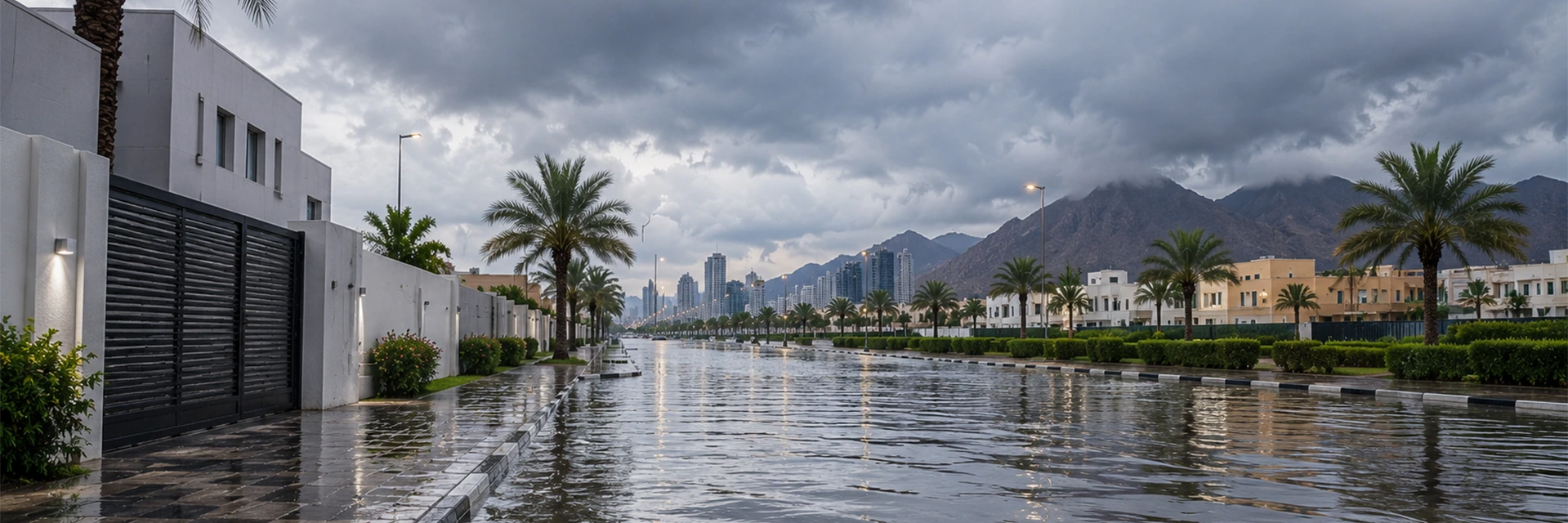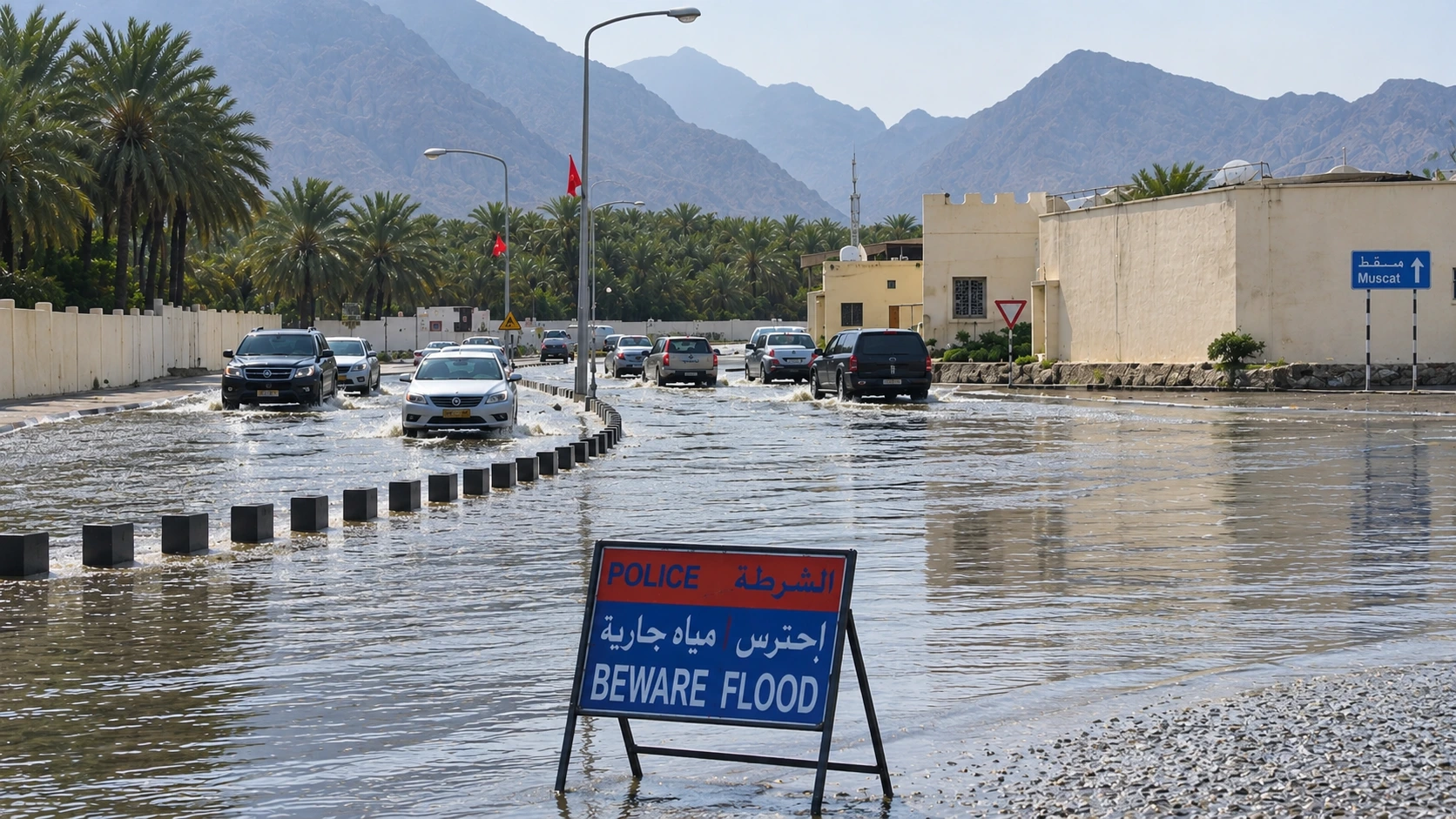



An atmospheric trough is affecting parts of the country, and the National Multi-Hazard Early Warning Centre has issued updates on expected rain. An alert tells people to take care. It does not keep water out of a building. Only protection that is already in place can do that. This article looks at where buildings are exposed, what a flood protection plan should include, and how passive protection works when floodwater arrives. This is the initial content of the editor.
Oman’s Heavy Rain Alert: What the Early Warning Centre Has Reported
Areas Covered by the Weather Alert
The National Multi-Hazard Early Warning Centre reported that local weather formations and an atmospheric trough would continue to affect Oman on Wednesday and Thursday, 28 and 29 October 2026. Oman Observer reported heavy to moderate rain and hail in several wilayats, with rain expected to continue through Friday.
The activity is concentrated mainly over the Al Hajar Mountains. At times it may extend to coastal areas in South Batinah, North Batinah, Muscat, South Sharqiyah and Musandam. These are the areas covered by the alert, not confirmed conditions in each place. The effects of the trough may continue until the end of the month.
Why Heavy Rain Can Lead to Flash Flooding
Mountain terrain and hard ground send rainwater downhill quickly. Wadis and roads can fill within a short time, even when the rain falls some distance away. For this reason, heavy rain in upland areas is treated as a flash flood concern for the low ground around it. The alert does not report flooding. It is a reminder of how quickly conditions can change.
Why Flood Preparedness Must Begin Before the Rain
Weather alerts are valuable, but the time between an alert and water reaching a building can be short.
Flash Floods Leave Little Time to Respond
Water can enter a building within minutes. There is often no time to collect equipment, travel to site or call staff. Roads may be affected during a storm, and teams may not be able to reach the property. Any step that depends on someone arriving in time is at risk of failing.
A Weather Alert Is Not a Flood Protection Plan
An alert gives a warning. A plan gives protection. Flood preparedness means that every vulnerable entry point has already been identified and protected before the first rain falls. Owners who wait for the alert have only a short time to act, and conditions may already be difficult. A prepared building meets an alert with a plan that is already in place.
Where Buildings Are Most Exposed to Floodwater
Water follows the lowest route. Buildings are most exposed where a low point meets an opening.

Basement and Parking Entrances
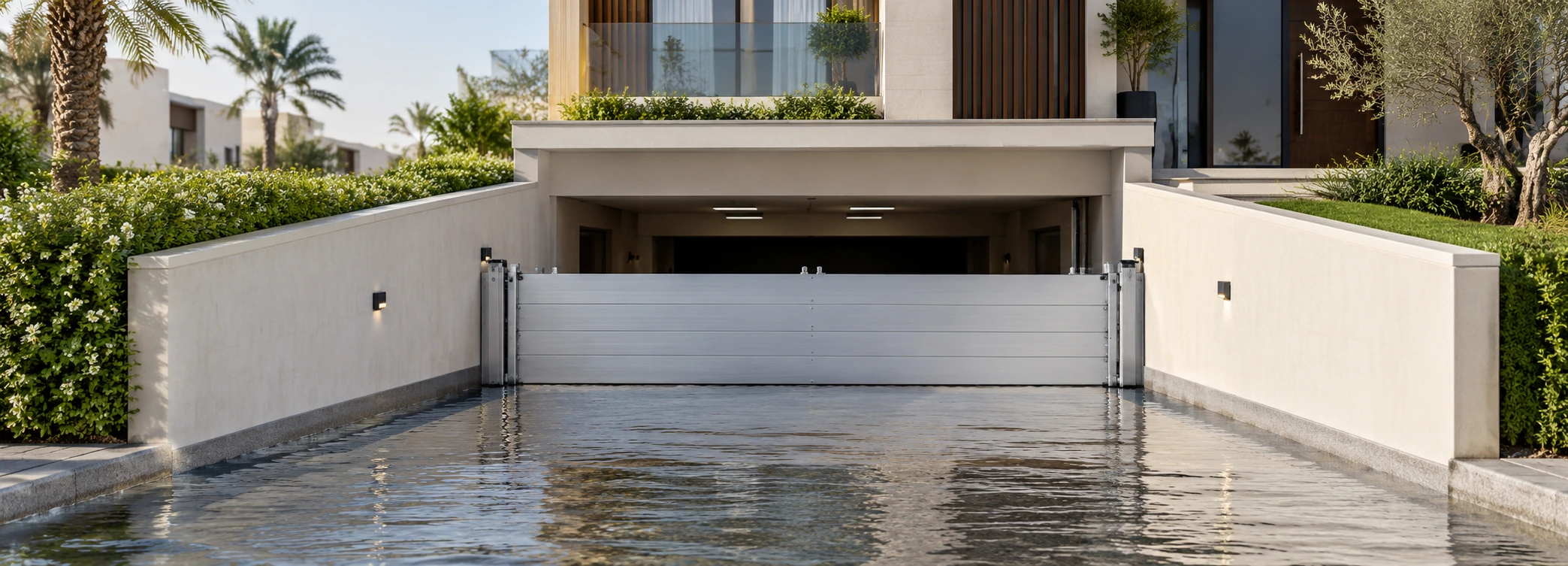
Ramps and below ground entrances are low points. Surface water runs towards them and flows in. Basement flood protection therefore begins at the entrance to the ramp or stairwell, not inside the building. Once water enters a basement, it is slow to remove and can reach plant rooms, stored goods and vehicles.
Ground-Level Entrances and Building Openings
Doors at street level, loading bays and service entrances are the next points of risk. Water ingress at these openings can spread across a ground floor quickly. Gaps around doors, vents and cable routes also allow water to pass. Each opening should be considered on its own.
Commercial Properties and Critical Infrastructure
Hospitals, data centres, utilities, commercial towers and transport facilities carry a wider responsibility. An interruption in these buildings affects many people, not only the owner. Flood resilience for infrastructure means that essential services keep running while conditions outside are difficult. Protection at the entrances is the first step in keeping them in service.
What a Flood Protection Plan for Buildings in Oman Should Include
A flood protection plan should be written down, with clear responsibilities for specific people, and reviewed regularly. It needs to be based on the actual conditions of the individual site.
Assess the Flood Risk of the Site
Start with the position of the building. Look at nearby drainage, wadi routes, ground levels and any past water entry. Consider how water would approach each side of the property. Record the findings so that the plan rests on evidence, not assumption. A site assessment by a qualified engineer helps to confirm the risk.
Secure Every Entry Point for Water
List every opening that water can reach. Include ramps, stairwells, doors, loading bays, vents and service openings. For each one, decide how it will be protected and who is responsible. A single unprotected opening can undo the protection of all the others.
Choose Protection That Works Without Staff or Power
Protection that relies on people arriving, or on electricity, can fail in a storm. Staff may not reach the site, and power may be interrupted. A plan should therefore favour protection that acts on its own and depends on neither. Review the plan at least once a year and after any significant weather event.
Passive Automatic Flood Protection: How It Works
Passive automatic flood protection is built to act without instruction.
Hidden in Daily Use, Active When Water Rises
The system stays out of the way during normal operation, so entrances remain in daily use. When floodwater arrives, it rises automatically into position. Dosteen’s passive automatic flood protection needs no staff action and no power supply. This suits properties that may be unattended, or affected by power loss, during a storm.
Suitable for Vehicle and Pedestrian Entrances
The system can protect parking ramps, basement entrances, and building doors. It suits both vehicle and pedestrian access, so one approach can cover the main entry points of a property. Each installation is planned around the opening and the site. See Dosteen’s flood protection solutions for further detail.
Frequently Asked Questions
1. How Should Buildings Prepare for Flash Floods?
Buildings in Oman should prepare before rain is forecast. Assess the site, list every opening that water can reach, and protect each one. Choose protection that works without staff or power. Review the plan regularly and keep drains clear. Preparation done early is more dependable than action taken during an alert.
2.How Can a Building Be Protected from Flash Floods?
Protect the openings where water can enter. Basement ramps, doors at ground level, loading bays and service entrances are the main points. Passive automatic flood protection suits entrances that must stay in daily use, because it rises on its own when water arrives. Drainage and waterproofing add a further layer of protection.
3.How Can Floodwater Be Stopped from Entering a Basement?
Surface water is best stopped at the entrance to the basement, at the top of the ramp or stairwell. Protection across that entrance blocks water from flowing in. Check other routes as well, such as vents, drains and cable openings. Water that rises through walls or drains needs separate measures, such as waterproofing and check valves.
Prepare Before the Next Rain
The current alert is a reminder that protection must be in place before the rain arrives. A flood protection plan for buildings in Oman should identify every entry point and protect each one with measures that work without staff or power. Acting now is calmer and more effective than acting during the next alert. Dosteen supplies passive automatic flood protection for basements, parking ramps and building entrances. To discuss how to protect your property, speak with Dosteen’s engineering team.